Somali civil society organizations (CSOs) are the backbone of communities – from delivering humanitarian aid in drought-stricken regions to educating the next generation and advocating for good governance. Yet many Somali CSOs operate in a challenging environment, shaped by decades of conflict, state fragility, and resource constraints. Generic, one-size-fits-all capacity-building approaches have often fallen flat in this context, failing to address each organization’s unique needs. This is why custom capacity development plans – tailored roadmaps for strengthening each organization – are so crucial. Crafting bespoke plans that consider Somalia’s socio-political realities can empower local NGOs and youth-led initiatives alike to become more resilient, effective, and sustainable. At Somali Ingenuity for Technical Excellence (SITE), a consultancy dedicated to “tailored solutions” and “sustainable impact”, we have seen first-hand how customized capacity development can transform CSOs and, by extension, the communities they serve.
What Are Custom Capacity Development Plans?
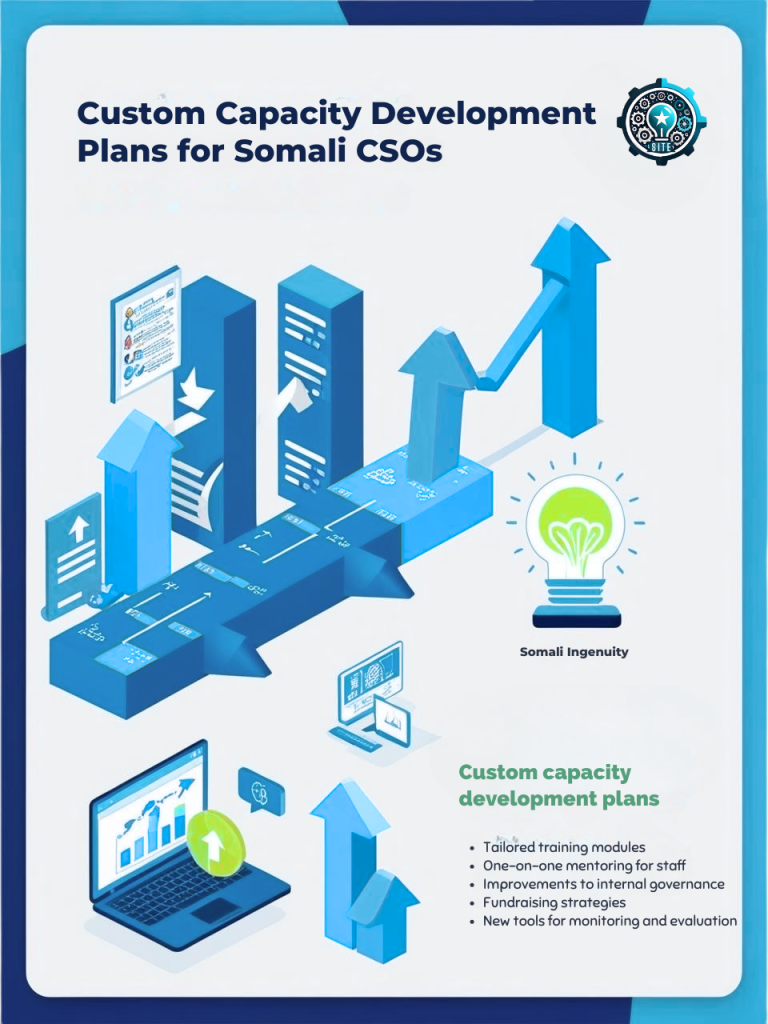
Custom capacity development plans are organization-specific strategies to build skills, systems, and structures, developed after carefully assessing a CSO’s strengths, weaknesses, and context.
Unlike generic capacity building (such as one-off workshops or imported toolkits applied uniformly), a custom plan targets the particular gaps and goals of an organization. It might include:
- Tailored training modules
- One-on-one mentoring for staff
- Improvements to internal governance
- Fundraising strategies
- New tools for monitoring and evaluation
All of these are aligned with that CSO’s mission and operating environment.
In Somalia’s case, embracing “flexible best fit” rather than “fixed, non-flexible, one-size-fits-all approaches” is paramount. Too often, past interventions assumed a linear, technocratic model that ignored the real-world complexities on the ground.
A tailored plan recognizes that capacity development is both technical and political, and that context matters – as one Somali expert noted, “one-size-fits-all solutions are in the end fitting no-one.”
In practical terms, this means:
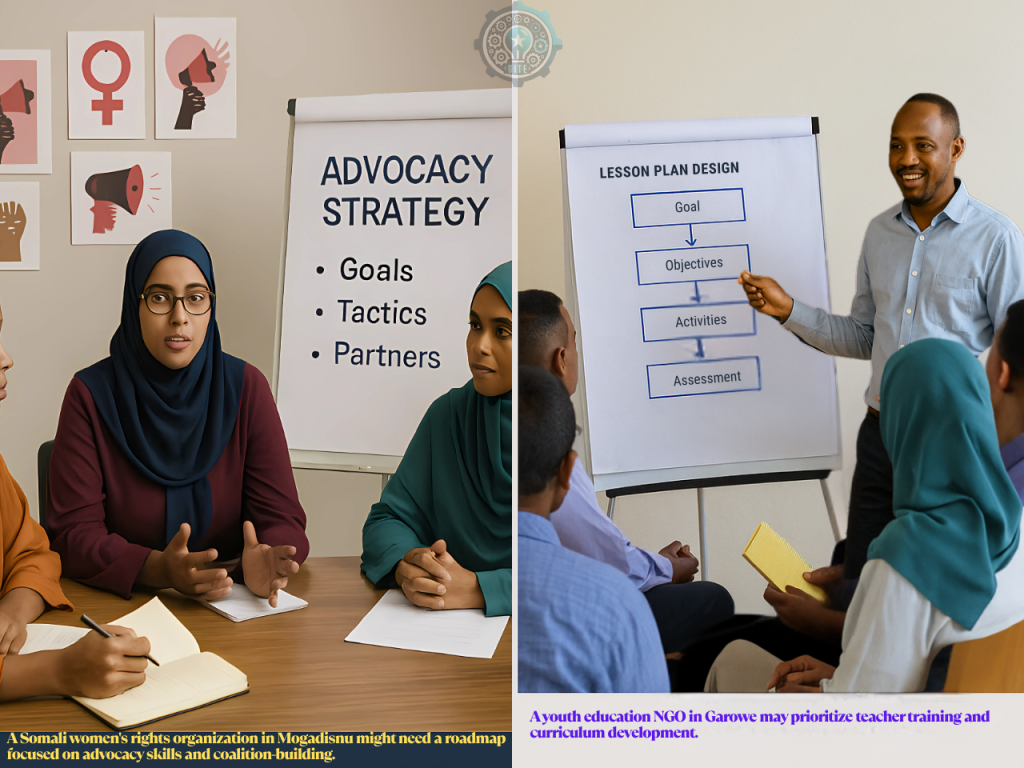
- A Somali women’s rights organization in Mogadishu might need a roadmap focused on advocacy skills and coalition-building.
- A youth education NGO in Garowe may prioritize teacher training and curriculum development.
Custom plans are owned by the CSO itself, demand-driven by local priorities, and flexible enough to evolve. They are the opposite of imposed frameworks or rigid checklists that overlook ground realities.
The Somali Context: Why One Size Won’t Fit All
Somalia’s socio-political landscape is unique, and any capacity development effort must be rooted in this reality. After the collapse of the central government in 1991, CSOs stepped up as vital service providers and peacebuilders. They operate amid ongoing security challenges, clan dynamics, and fragile state institutions. Regions across Somalia differ in stability and needs – an approach that works in relatively peaceful Somaliland may not suit Southwest State or Jubaland. As a result, “Somali regional differences and the uniqueness of each context” demand that solutions be tailored, not templated.
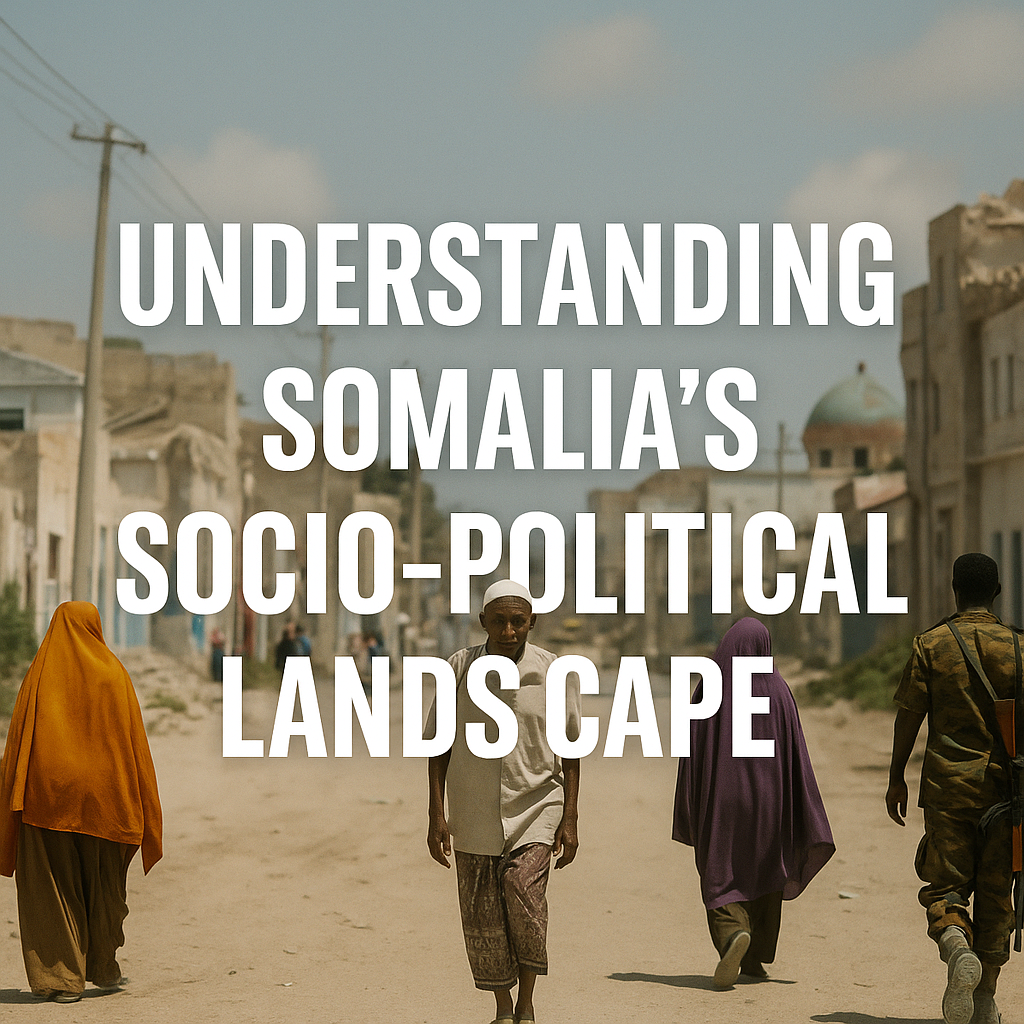
Civil society itself takes many forms in Somalia: from traditional clan elders mediating disputes to modern NGOs lobbying for human rights. Trust and legitimacy vary – some communities view CSOs as genuine representatives, while others are skeptical, seeing them as donor-driven or clan-biased. Moreover, most Somali CSOs face internal challenges like weak governance, scarce funding, and high staff turnover. These issues are often tied to Somalia’s history; many NGOs sprang up during the civil war, reliant on short-term projects and external aid. To overcome such hurdles, capacity support must navigate clan complexities and build on local strengths. For example, improving a CSO’s internal governance might involve establishing inclusive decision-making that transcends clan lines – a delicate task that a generic training on “NGO management” may not achieve. Tailored plans take into account factors like clan representation, local languages and customs, gender norms, and the legacy of conflict on community relationships. They also emphasize conflict sensitivity – ensuring that bolstering one group’s capacity doesn’t inadvertently inflame tensions, but rather contributes to peace and cohesion.
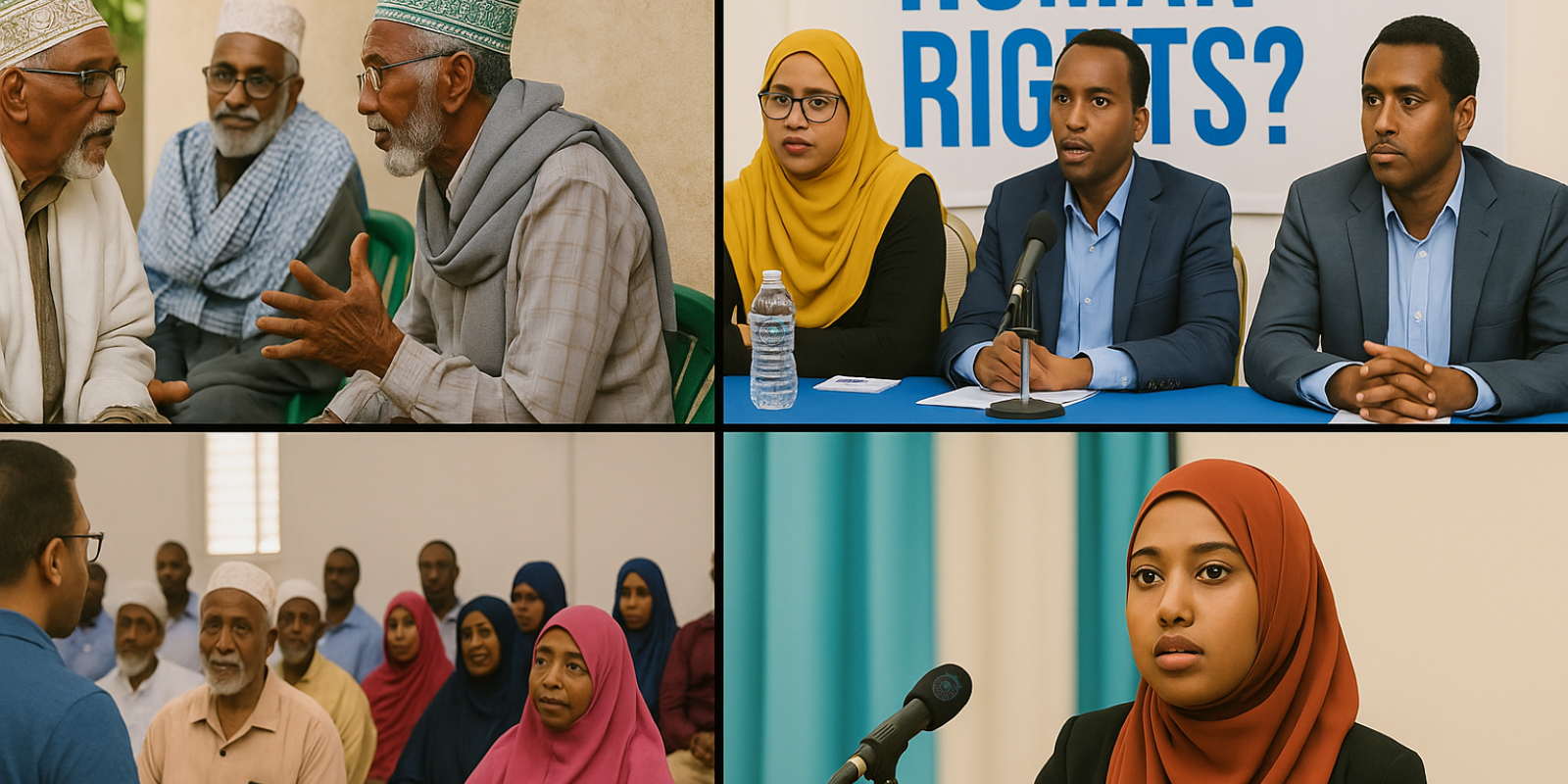
In short, Somalia’s context teaches us that capacity building cannot be divorced from context: it must be locally led and “context specific”, recognizing that what works elsewhere must be adapted to work in Somalia
📘 Next in the Series: Diverse CSOs, Diverse Needs
Every Somali CSO is unique—from humanitarian responders in Baidoa to youth-led education initiatives in Garowe.
In Part 2, we dive into how tailored capacity plans are reshaping organizations across sectors, with real examples you won’t want to miss.
🕓 Published quarterly– catch the next part at the end of the quarter
📩 Contact SITE today to begin your transformation—because your mission deserves more than a generic solution.